What a $1M Video Costs in 2026 (And Why the Answer Should Change How You Think About Creative)
What a $1M video Costs in 2026
Date
Category
Writer
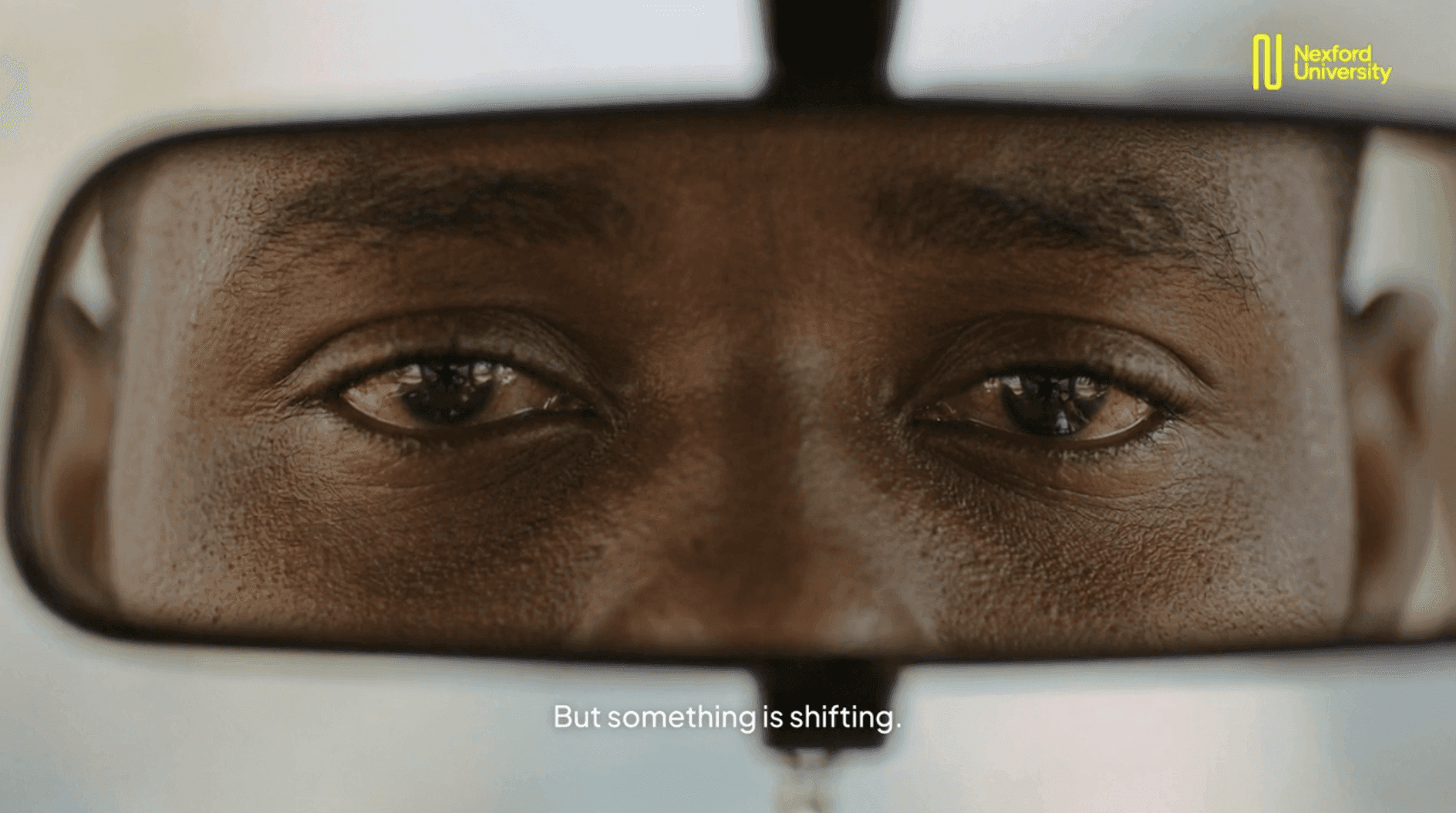
Two years ago, if a technology company wanted a 60-second brand narrative video — the kind with cinematic visuals, a compelling script, professional voiceover, original sound design, and multiple composed shots — the conversation started at $150,000. For premium production with a top agency, it could easily reach $500,000+. The process took 8 to 12 weeks minimum. It involved location scouts, film crews, casting sessions, post-production houses, and layers of revision cycles that stretched timelines and inflated budgets.
Most growing companies never even had the conversation. They saw the price tag, decided it wasn't for them, and settled for whatever their in-house team could produce with a DSLR and a weekend.
That era is over.
In 2026, that same 60-second brand video — with the same emotional impact, the same production quality, the same strategic storytelling — can be produced in one to two weeks at a fraction of the original cost. Not a watered-down version. Not a "good enough for social media" compromise. A legitimate, broadcast-quality brand film that communicates exactly who a company is and why it matters.
The question every marketing leader should be asking right now is not whether this is possible. It's why they're still paying 2023 prices for 2023 workflows.
What Changed
The shift didn't happen overnight, but it reached a tipping point. Generative AI tools have matured to the point where they can produce photorealistic video, generate natural-sounding voiceover, compose original music, and create visual environments that would have previously required physical sets or expensive CGI. According to Forrester, creative studios that have integrated AI into their production workflows are delivering work 80% faster than traditional processes, with cost reductions between 40% and 50%.
But the tools alone don't explain the shift. After all, the tools are available to everyone. Any company can sign up for the same AI platforms. The difference is in how they're used — and more importantly, who is using them.
A generative AI tool in the hands of someone without creative direction produces exactly what you'd expect: generic, directionless content that looks like it was made by a machine. It's technically impressive and strategically empty. It doesn't understand your brand, your audience, or the story you need to tell. It doesn't know that the pacing needs to slow down at the 40-second mark to let the message land. It doesn't know that the color palette needs to shift in the final sequence to create an emotional arc. It doesn't know any of the things that separate a video people skip from a video people remember.
An AI tool in the hands of an experienced creative director produces something entirely different. The strategic thinking — the script, the narrative structure, the visual language, the emotional cadence — still comes from human judgment. That part hasn't changed and won't change. What has changed is everything that used to sit between the creative vision and the finished product: the production logistics, the rendering time, the asset creation, the iterative refinement. AI has compressed that middle layer from months to days.
The result is that the creative judgment that used to cost $500,000 to execute now costs a fraction of that to bring to life — because the execution infrastructure has fundamentally changed.
Why This Matters Beyond Video
Video is the most dramatic example, but the same shift is happening across every creative discipline.
Brand identity systems that required months of exploration and refinement can now move through concept development at three to four times the previous pace. Presentation decks that took a week of designer time can be produced in hours. Campaign assets that used to require individual production for every format and channel can be generated, adapted, and deployed across platforms in a single workflow.
The volume of creative output that a small, senior team can produce today would have been physically impossible for the same team two years ago. Studios that have restructured their operations around AI-augmented workflows are delivering 50 or more unique assets per month to a single client — brand videos, campaign creative, social content, sales collateral, event materials, web design — with turnaround times measured in days, not weeks.
This isn't about replacing creative talent with machines. It's about removing the bottlenecks that used to sit between talent and output. The strategic thinking, the brand understanding, the creative judgment — those are more valuable now than they've ever been, precisely because the execution barriers have fallen. The studios that understand this distinction are producing work that is both faster and better, because their senior creatives are spending more time on the decisions that matter and less time on the production tasks that used to consume their days.
The New Economics of Creative
For companies evaluating their creative investments in 2026, the implications are significant.
First, the price-to-quality ratio has fundamentally shifted. Work that was previously accessible only to companies with six-figure creative budgets is now within reach of growth-stage companies spending a fraction of that. This doesn't mean creative is cheap — senior strategic thinking and experienced creative leadership still command premium value. But the total cost of producing world-class creative has dropped dramatically because the production component of that cost has been compressed by AI.
Second, speed is no longer a trade-off with quality. The old equation — fast, good, or cheap, pick two — is breaking down. AI-augmented studios are delivering all three simultaneously, because the technology has eliminated the manual production bottleneck that used to force the compromise. A brand video in two weeks. A full campaign asset suite in five days. A presentation deck in hours. These timelines would have been fantasy in 2023. In 2026, they're standard for studios that have made the transition.
Third, the gap between companies that have adapted and companies that haven't is becoming visible. When one competitor launches a campaign with cinematic brand films, cohesive cross-channel creative, and a steady cadence of fresh content — and another competitor is still recycling the same stock photography and templated social posts — the market notices. Buyers notice. Investors notice. Talent notices. The creative gap has always existed between companies with different budget levels. What's new is that budget is no longer the primary driver of that gap. Operational model is.
What This Means for Your Next Creative Decision
If you're a marketing leader at a technology company and you're still operating under 2023 assumptions about what creative costs, what timelines look like, and what's possible with your budget, you're leaving enormous value on the table.
The companies that are winning the brand perception battle in 2026 are not necessarily the ones spending the most. They're the ones who have partnered with creative studios that have rebuilt their workflows around the new reality — studios led by senior creatives who understand both the strategic craft and the technological shift, and who are using that combination to deliver work that would have been unimaginable at this price point just two years ago.
The question is no longer "Can we afford great creative?" The question is "Can we afford to keep producing creative the old way?"
This is not theoretical. This post includes a 60-second brand narrative video we recently produced for Nexford University — an AI-powered, globally accredited online university. The entire video was created using AI-integrated production workflows: scripted, directed, composed, and produced by our creative team with AI as the production engine. It was delivered in a fraction of the time and cost of traditional production, with the same strategic depth and emotional impact.
Latest Articles.
© Kanso Studio
Thoughts, ideas, and perspectives on design, simplicity, and creative process.